The Woodlands Mesh Project is looking for good locations with tall trees that can host a southern-sky facing DIY solar powered device that acts as a LoRa radio signal repeater for your neighborhood to retransmit Meshtastic® and MeshCore messages. (about RF Tree Interference, Mesh Treepeater Planning, Hoisting Devices, & Safety)
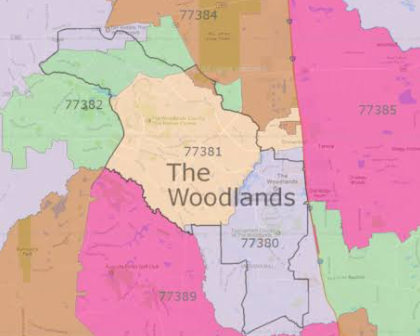
Community-sponsored, promotional DIY tree nodes are available for your tall trees located in these zip codes; 77380, 77381, 77382, 77384, 77385, 77386, 77389.
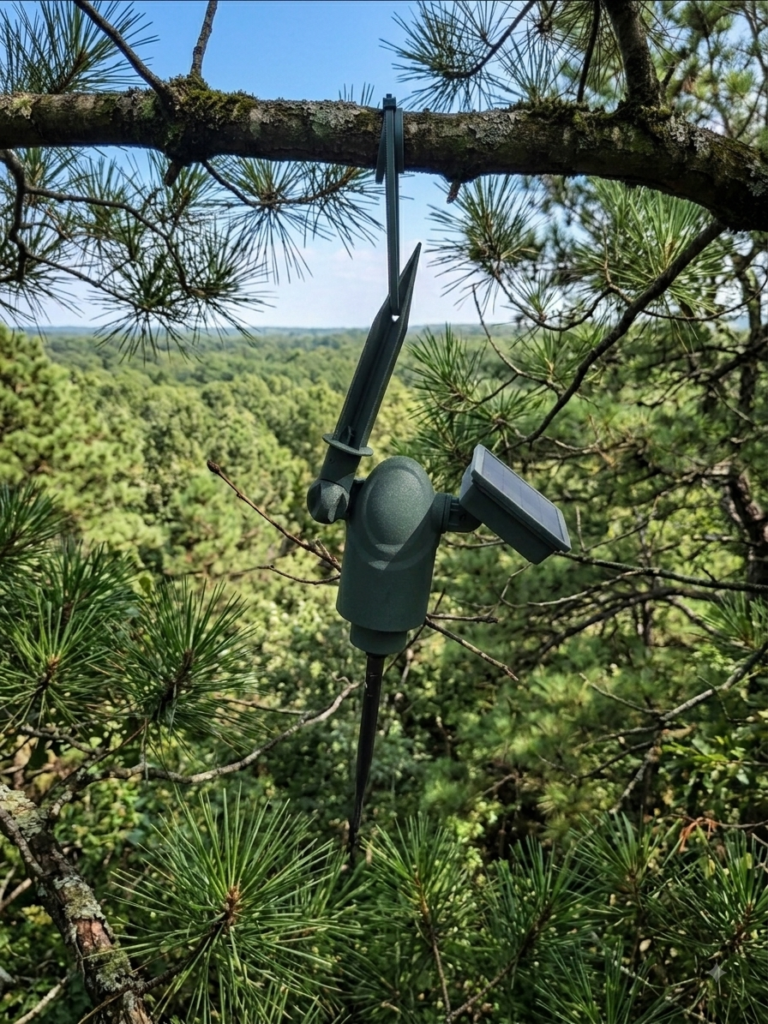
Sky Node: A preprogrammed DIY tree node device “treepeater” that repeats signals sent from a pocket node.
Pocket Node: A pre-programmed, credit card sized device that pairs with your smart phone via Bluetooth, and sends text messages via a phone app to other nodes.
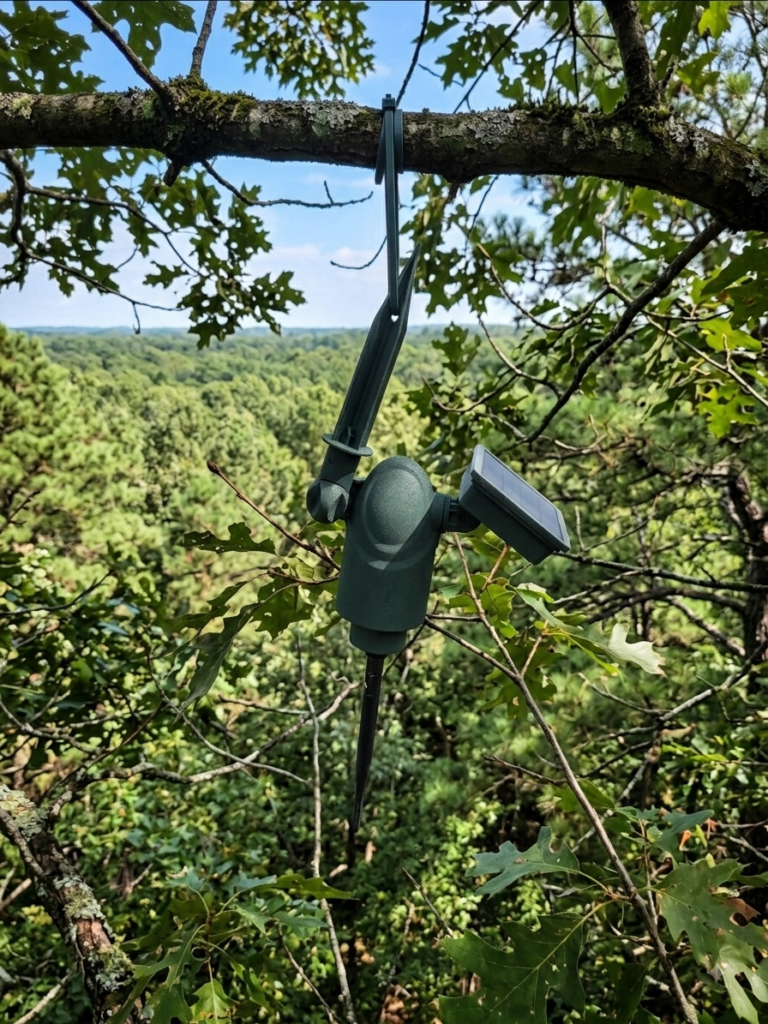
Some Assembly Required – The DIY solar-powered LoRa node is 90% complete. You’ll need to install the rechargeable solar battery (included), plug-in the solar charging connector, inspect the completed build*, and hoist the node to the highest possible point available, facing the sunny southern sky. The zero-config pocket node is complete and only needs to be paired with your smartphone for use with an android or ios app. (installation not include. see DIY hoist masters & DIY disclaimer)
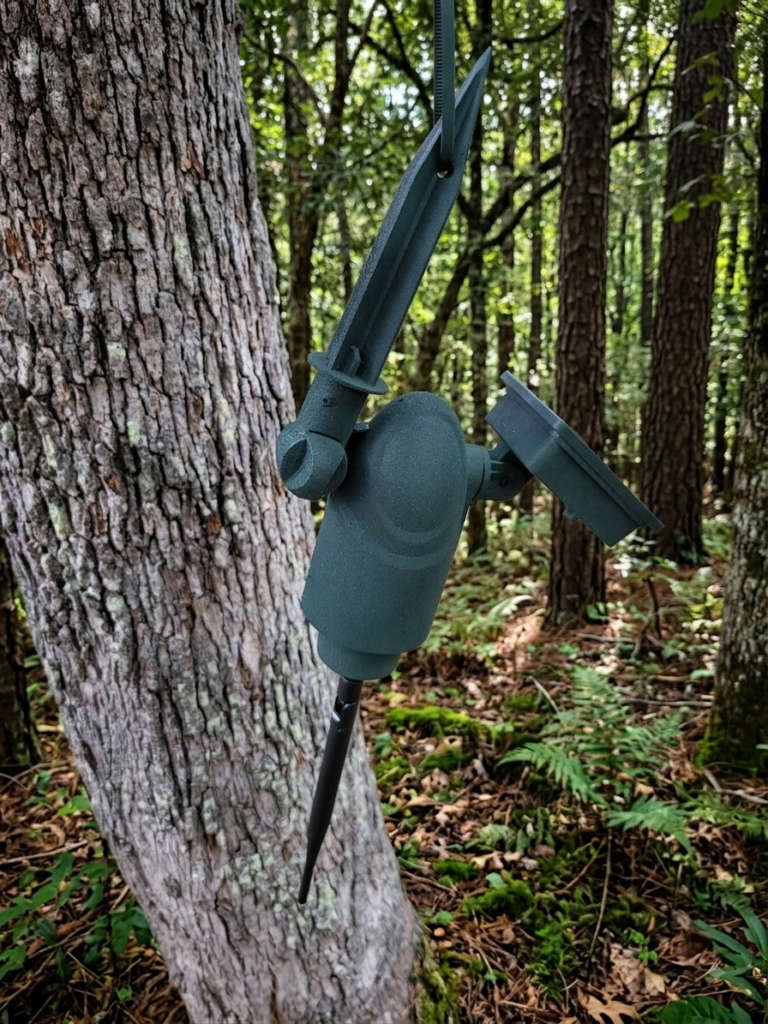
Configuration Free & Minimal Maintenance – The DIY solar-powered sky node is pre-configured for the community’s LoRa protocol and settings. Updates are preformed OTA by admins. The LiFeP04 battery lasts for years and is replaceable by lowering the node and removing the solar panel for access.
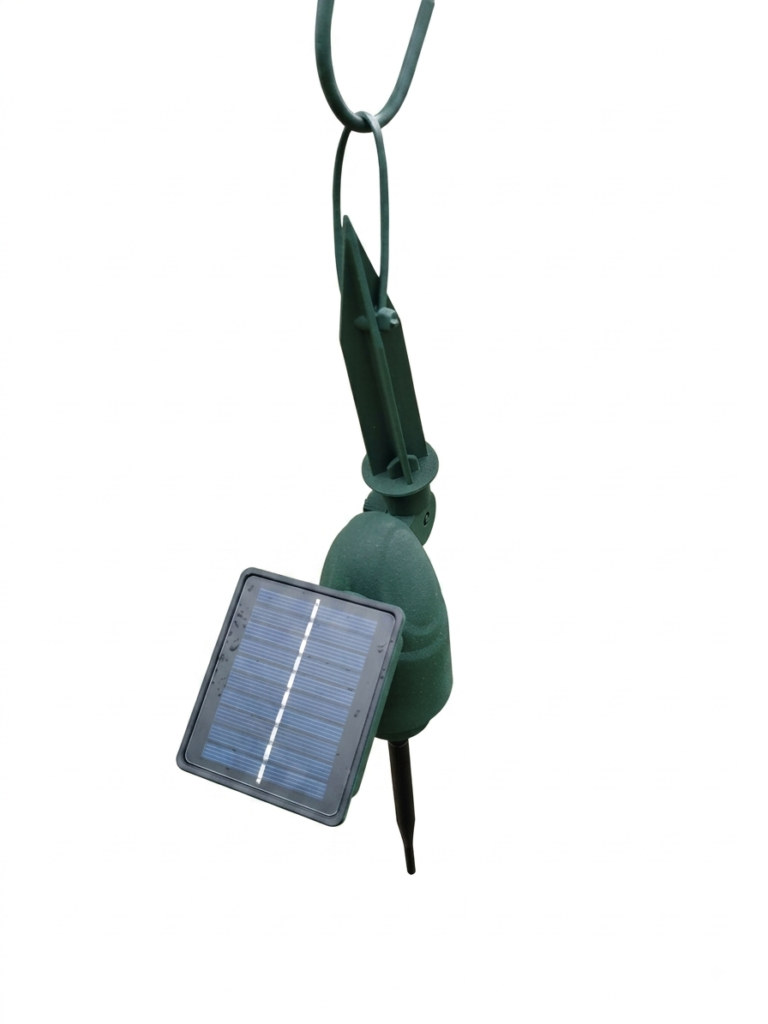
What’s Inside – The DIY tree node “treepeater” build uses a donor solar lamp that includes a 3.2V LiFePO4 solar battery (short style), solar panel, and charge controller. The dusk to dawn sensors and on/off switch is bypassed allowing the battery to continuously power an ultra-small, low-power wireless development board XIAO nRF52840 with a Nordic nRF52840 ARM Cortex-M4 microcontroller. (installation not include. see DIY hoist masters & DIY disclaimer)
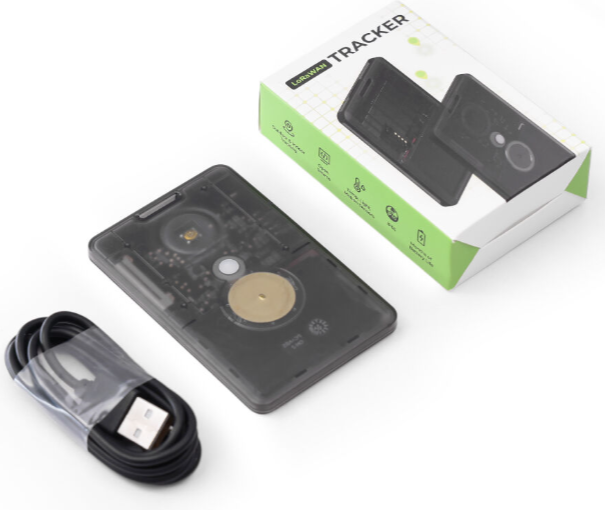
Pocket Node – Paired with a smartphone and kept within Bluetooth range, the pre-configured pocket node transmits text messages via the phone app using long-range (LoRa) radio signals that can hop across neighboring sky node repeaters to it’s destination.
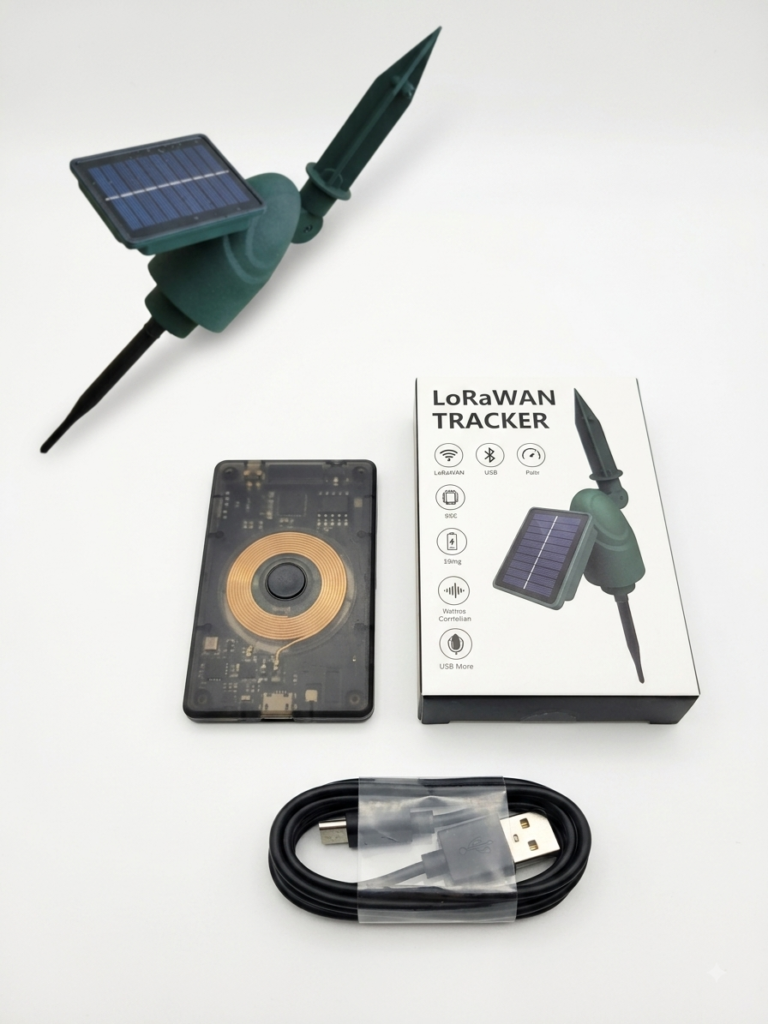
Complete DIY Tree/Pocket Node Kit – Available for Purchase (inquire)
Includes 90% complete tree node (battery included), and a credit-card sized pocket node, both pre-configured with community protocols and settings. (installation not include. see DIY hoist masters & DIY disclaimer)
Sign up for TWTXmesh Tree Node Project
Please review; Treepeater What’s Inside, Hoist Master, Gear & Safety Warnings
MeshPeaks Treepeater Planning
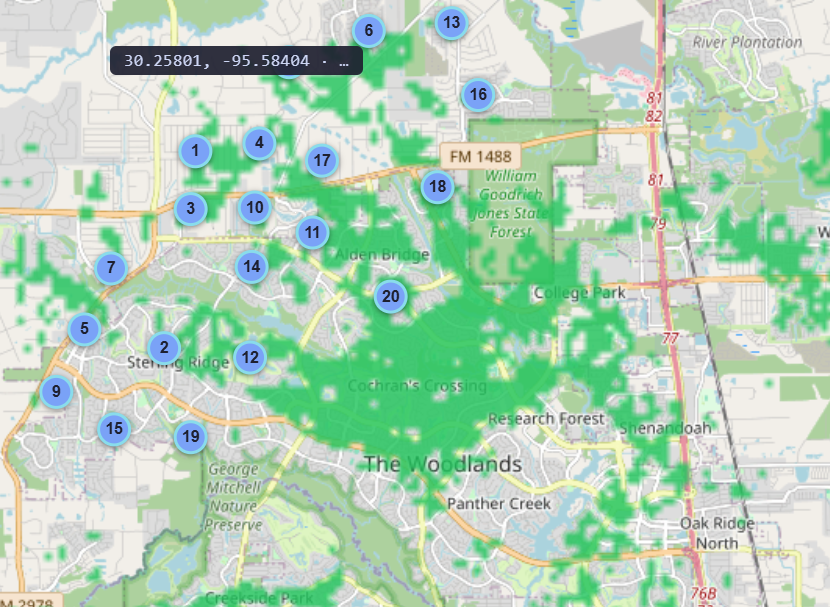
MeshPeaks.com is a free tool built by IterationX for planning MeshCore and Meshtastic links. You drop a transmitter and a receiver on the map, set the antenna heights, and it shows you whether they can actually see each other over the real terrain.
MeshPeaks TWTXmesh | How To Use MeshPeaks (video)
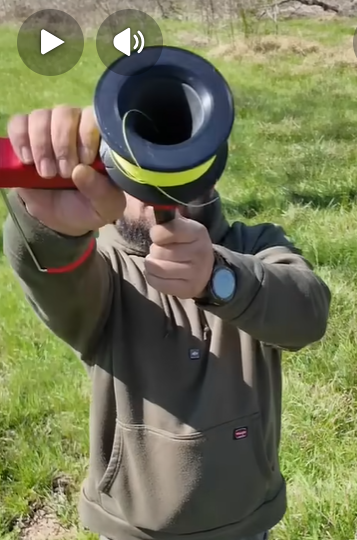
DIY Hoist Masters – Deploying solar nodes into tree-tops requires some level of skill and is not without some risk*. If you lack the proper safety equipment, training, or absolute confidence in your ability, we strongly advise seeking help from a qualified individual. (see Safety-Warning)
Video examples (not affiliated with TWTXmesh):
– How the DXLauncher One-Shot Works: YouTube Short
– Solar Powered Node in Top of Tree: YouTube Short
– Hanging a Puller, No Climb Method: YouTube Short
The Gear Needed
- Throw weight: A small 8-10 ounce canvas weight or a bright throw bag.
- Throw line: Slick, high-visibility nylon line (like mason line or a specific arborist throw line) that does not catch on bark.
- Pull cord: Weather-resistant paracord or UV-resistant dacron rope to hold the node long-term.
- The node setup: A waterproof container holding the Meshtastic board, a small solar panel, and an antenna, plus a secure top loop for hanging.
Step-by-Step Hoisting Method
- Tie the line: Attach the slick throw line securely to your throw weight.
- Throw over a branch: Throw the weight over a high, clear branch using an underhand or pendulum swing.
- Pull the heavy rope: Tie your strong paracord to the thin throw line and pull it back over the branch.
- Attach the node: Clip your waterproof Meshtastic node assembly to the paracord.
- Hoist and secure: Pull the node up to your desired height, then tie off the bottom end of the paracord firmly to a nearby tree trunk or ground stake.
⚠️ Safety Warning: Deploying Nodes in Trees
While elevating your Mesh LoRa nodes is an excellent way to maximize line-of-sight and network range, hoisting nodes can be dangerous, and climbing trees to install them carries a significant risk of severe injury or death. (see DIY disclaimer)
Working at height introduces unpredictable hazards, including brittle or dead branches, hidden power lines, and the inherent danger of falls. Juggling tools, enclosures, and solar panels while suspended only compounds these risks.
If you lack the proper safety equipment, training, or absolute confidence in your ability to climb safely, do not attempt the installation yourself. We strongly advise seeking help from a qualified professional—such as a certified arborist or experienced climber—to secure your equipment. No amount of RF range is worth risking your life.
*DIY Project “Use at Your Own Risk” Disclaimer
All information, instructions, and projects shared on this site are for educational and informational purposes only.
By following any of the tutorials, instructions, or projects provided, you acknowledge that you are participating entirely at your own risk. AWM Directories, LLC, this website, and its affiliated imprints assumes no liability or responsibility for any property damage, personal injury, project failures, or any other loss or damage that may result from your use of this information. See DIY Disclaimer Notices at Terms & Conditions.
How Trees Interfere with RF
Trees absorb, scatter, and attenuate LoRa radio frequency (RF) signals primarily due to water content in leaves, branches, and trunks. While LoRa’s high receiver sensitivity and robust modulation allow it to punch through light foliage, dense woods or antennas placed directly against tree bark suffer from degraded signal strength (RSSI), lower signal-to-noise ratios (SNR), and higher packet loss.
Key Factors of Tree Interference
- Water Absorption: High water and sap content in leaves and wood act as a sponge for RF energy, heavily dampening 868 MHz or 915 MHz signals.
- Proximity Effect: Mounting an antenna right next to a trunk or heavy branch causes severe near-field detuning and a high Standing Wave Ratio (SWR), destroying antenna efficiency.
- Scattering and Multipath: Forests create non-line-of-sight (NLoS) conditions where waves bounce randomly off vegetation, causing unstable signal drops.
Mitigation Strategies
- Clear the Trunk: Keep antennas at least 2 to 3 feet away from wood surfaces using outriggers or brackets.
- Elevate Height: Raise the node high up or above the canopy line to re-establish clear line-of-sight.
MESH EDUCATION: Recommended Reading – “Your Pine Trees Are Not a Conspiracy: What We Actually Know About 915 MHz and Pine Needles” RDUMesh (link)
Treepeater Testing
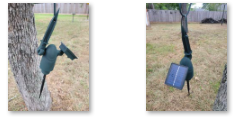
Solar node XIAO nRF52840, battery 3.2V LiFePO4 (the safe* lithium), Solar panel, Charge controller, Telemetry add-ons (TBD) Firmware ver. 2.7.15.567b8ea
23dd 0441 1d21 0897 329a
Quick Link Index
- Treepeater Testing
https://thewoodlandsmesh.net/tree-node/#treepeater-testing - Treepeater What’s Inside
https://thewoodlandsmesh.net/tree-node/#treepeater - Treepeater Hoist-Master, Gear & Safety Warnings
https://thewoodlandsmesh.net/tree-node/#hoist-master - Treepeater Planning with MeshPeaks Tool
https://thewoodlandsmesh.net/tree-node/#meshpeaks - Trees RF Interference
https://thewoodlandsmesh.net/tree-node/#tree-interference - DIY Disclaimer & Safety Notice
https://thewoodlandsmesh.net/tree-node/#diy-disclaimer